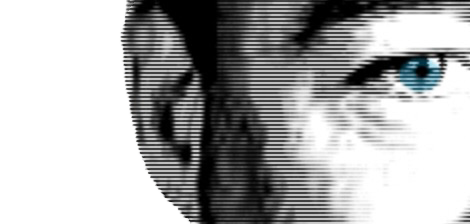
Bondi Beach, one year later

BONDI BEACH - Arsen Ostrovsky jumps.
The ground near the pavilion is patchy, so a couple dump trucks have arrived to deliver some soil to repair it. One of them deposits the topsoil and the tailgate swings shut, creating a loud bang.
It sounds like a gun shot.
Ostrovsky stops speaking for a moment. He briefly closes his eyes, remembering. That day. That afternoon.
December 14, 2025: it’s the first day of Hannukah, and many members of Sydney, Australia’s Jewish community have gathered to celebrate at Archer Park, which overlooks Bondi Beach. It’s a beautiful place. The event has been billed as “Hannukah by the Sea,” and maybe 1,000 people are there, celebrating. Some of the kids are in the playground, the adults are milling about.
The Hannukah candles hadn’t been lit yet. So, at about a quarter to seven, Arsen was lined up to get food for his wife and two daughters, who are nine and five. That’s when he heard the first shot.
Two monsters in the shape of men, Sajid Akram and his son Naveed Akram, were on the stone footbridge that leads to Archer Park and, beyond that, Australia’s most renowned beach. The footbridge gave the pair an elevated view of the park, and so they started firing their high-powered rifles at anything that moved. “They were hunting Jews,” Arsen Ostrovsky says.
It goes on for ten full minutes. Shot after shot after shot. People screaming, running towards the beach, hiding behind picnic tables and trees. There is blood everywhere, rivers of it. “We were sitting ducks,” Ostrovsky says, looking toward the footbridge.
A couple in their sixties, Boris and Sofia Gurman, try to stop the two monsters, and are the first to be murdered. They had been married for 34 years.
Another man, Ahmed al-Ahmed - a Syria-born Australian and Muslim - is unarmed like the Gurmans, but he somehow wrestles the gun away from the older bastard. Minutes later, he is shot several times - but ultimately survives.
A few dozen metres away, Arsen Ostrovsky is frantically scanning the park for his wife and daughters. He is beside a picnic table when he is shot. It hits him in the head.
He falls, and reaches up and feels blood gushing out of the wound, which is near the crown. When the blood is mopped away, you can see the white of his skull. Arsen doesn’t know where his wife and daughters are; he doesn’t know if he is about die. All around him, people are dead or dying - an 87-year-old Holocaust survivor, who had come to Australia from Ukraine. A ten-year-old girl, Matilda, who her parents called Bee because she loved bumble bees.
On this day, there are stickers of little bumble bees here and there, as a tribute to Matilda. There’s one painted onto the footbridge, too, beside a rendering of Hannukah candles.
Arsen Ostrovsky looks towards Bondi Beach. His wife and daughters escaped, and made it to shelter, in a spot where surfboards are stored. Arsen lay on the ground, bleeding, and figuring he was going to die. He was soaked in blood - his face, his hands, his clothing. So he took a selfie and sent it to his wife’s phone, and texted that he loved her. It was a goodbye.
It’s a very famous selfie, now. One of his friends saw it, later, and put it on social media. It went around the world. Almost immediately, antisemites started posting that it was faked. A false flag, they called it.
But Arsen Ostrovsky and I aren’t discussing that, now, or the lies of the liars. We aren’t talking about the global propaganda campaign that seeks to demonize Jews, the Jewish state, and the West. We talk instead about the people who saved his life - the nurse who ran across the road and held onto him until the ambulance arrived. The Australian journalist who brought him water. The surf kid who gave him his shirt, to help stop the bleeding.
“I remember this: the extraordinary courage of everyday Australians who ran up here from the beach, ran across the street to help us. They ran towards the gunfire, not away from it,” Arsen says, and his eyes are glistening.
“The gunfire was non-stop. People were trying to run away from here. People were running here to help us. We didn’t know when it was going to end.”
But it did, finally. An off-duty police officer fired at the bastard son, hitting him in the head from a distance of 130 feet, killing him. “An absolute hero,” Arsen calls the cop. Other police have finally arrived and have taken down the father, who survives. He now faces dozens of terrorism-related charges.
Arsen Ostrovsky surveys Archer Park. He looks again towards Bondi Beach, where people are swimming or playing on the sand. Above us, the Australian sky is blue and clear and without limit.
“When you hear people chanting about globalizing the intifada?” he says. “That’s what happened here. They globalized the intifada.”
[Kinsella is the author of the bestselling book The Hidden Hand, and was in Australia this week to speak at a global counterterrorism conference.]


Comments