Report on one of my talks Down Under

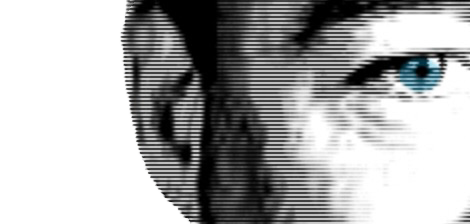
Me speaking at AIPAC in Sydney, Australia on Monday.
"Iran and its allies had spent years preparing an international propaganda operation that sprang into action within days of the October 7 Hamas attack on Israel, Canadian author and political strategist Warren Kinsella told an AIJAC meeting in Sydney on Monday.
Kinsella said his research identified dozens of social media accounts established 18 months before the Hamas-led assault, initially carrying ordinary posts about pets, celebrities and football.
On October 7, 2023, he said, those accounts switched to spreading false claims and denying atrocities, with some rapidly gaining hundreds of thousands of followers.
“On the morning of the seventh, as Hamas and its satanic allies were attacking Israel, those social media profiles came to life.”
The initial messaging appeared in Arabic, he said, followed within days by English-language material aimed at Western audiences. He attributed its reach to coordinated amplification through bot farms involving Iran, Russia and China.
Kinsella’s research revealed that Israel faced an information campaign prepared long before the attack, designed to undermine support for the Jewish state and turn public opinion against it.
“There is another war, the information war, the propaganda war, and we are losing that war, my friends. We are losing it.”
Kinsella is visiting Australia to speak at an international counterterrorism conference and discuss his latest book, The Hidden Hand: The Information War and the Rise of Antisemitic Propaganda.
The book has won the contemporary Jewish issues category at the 2026 Canadian Jewish Literary Awards, whose presentation ceremony took place in Toronto last Sunday while he was already in Australia.
A lawyer, columnist and political consultant, Kinsella served as a special assistant to Jean Chrétien when he led Canada’s Liberal Party, then as chief of staff in several federal ministries. His earlier books include Fight the Right and Web of Hate, an examination of Canada’s white supremacist movement.
He approached the campaign against Israel through the same questions he would ask about an election operation: who devised its messages, supplied its money, organised its supporters and delivered its arguments?
“The campaign manager is Iran,” he said.
In his assessment, Russia and China provided amplification, while Qatar supplied financial backing. Organisations and activist networks then carried messages into Western streets, campuses and political debate.
He argued that the speed and consistency of demonstrations after October 7 bore the hallmarks of an organised campaign.
Kinsella cited more than 2,000 protests against the Jewish state internationally before Israeli troops had even entered Gaza, pointing to repeated slogans, professionally produced signs and practical arrangements for demonstrators.
“They had food, they had drink, they had transportation. They even had legal representation paid for in the event that they were arrested.”
To Kinsella, these were signs of an established infrastructure capable of mobilising quickly, rather than an operation assembled in response to events.
He said the internet had given extremists access to audiences they had previously struggled to reach.
In The Hidden Hand, Kinsella argues that neo-Nazis and other hate movements had once faced rejection at elections and on street corners. Digital platforms gave small groups the means to spread their messages internationally, a capacity Hamas and its allies had used effectively after October 7.
Kinsella traced his concern about antisemitism to his teenage years, when his punk band, the Hot Nasties, supported British band 999 at the University of Calgary.
After their set, he and his friends were enjoying the headline act when someone pointed out three skinheads making Nazi salutes. One wore a T-shirt bearing the words “Drown the boat people”, a reference to refugees arriving in Canada from Southeast Asia.
He approached and told them to stop. One repeatedly called him an “effing Jew”.
“Well, I’m Irish and I’m Catholic. You should stop,” he recalled replying.
The man swung at him, and a fight broke out involving Kinsella, his friends and the skinheads.
Afterwards, as they left the venue, one of the skinheads pointed at him and warned: “We’ll be back.”
“They never left. They never disappeared,” Kinsella said.
In the decades that followed, he confronted antisemitism as a lawyer, journalist and political adviser. He described having rifles pressed against his chest, receiving bomb threats and death threats, and living under police protection, with an officer staying in his guest room.
But even after those experiences, he said the current climate was the worst he had known.
“I have never seen it as bad as it is now. Never.”
During the question-and-answer session, Kinsella said the response needed to address how younger people understood Israel.
He argued that portraying it as a uniformly white, colonial state concealed its diversity and allowed hostility towards it to be presented as antiracism.
Israel needed to communicate more effectively about its democratic institutions, religious diversity and the participation of minorities and women in public life.
“You have the greatest story to tell,” he said.
He also called for stronger education and greater accountability from social media companies.
His warning extended beyond Jewish communities. He argued that efforts to isolate and ultimately eliminate Israel also threatened Western democracy.
Asked about government responses, Kinsella criticised political leaders he believed were putting electoral calculations ahead of confronting antisemitism.
But he described Australia’s royal commission into antisemitism as a promising development and suggested Canada needed a similar inquiry.
Kinsella accused Anthony Albanese, Canadian Prime Minister Mark Carney and UK PM, Andy Burnham of making political calculations to retain younger, left-leaning voters.
“I think what your prime minister has done … is their calculation is that they cannot achieve and secure power without the support of younger voters”, he said.
He also criticised Australia’s recognition of Palestinian statehood, arguing that it was granted without securing promised changes, including elections, governance reforms and changes to educational materials.
His advice to Jewish communities was to maintain relationships across political parties, ensuring they had “friends everywhere” whoever formed government.
He also urged supporters to concentrate on persuadable audiences rather than prolonged online arguments with entrenched opponents or anonymous accounts.
“You need to devote yourself to other efforts and other communications to reach those reasonable people, those fair-minded people who I believe are still there.”
Kinsella urged Jewish communities to build alliances across political parties and focus on reaching people willing to listen. Countering the campaign, he argued, required better education, greater accountability from social media companies and a stronger effort to explain Israel to younger audiences.
“We cannot lose a generation,” he said. “We cannot lose the future."


Comments