
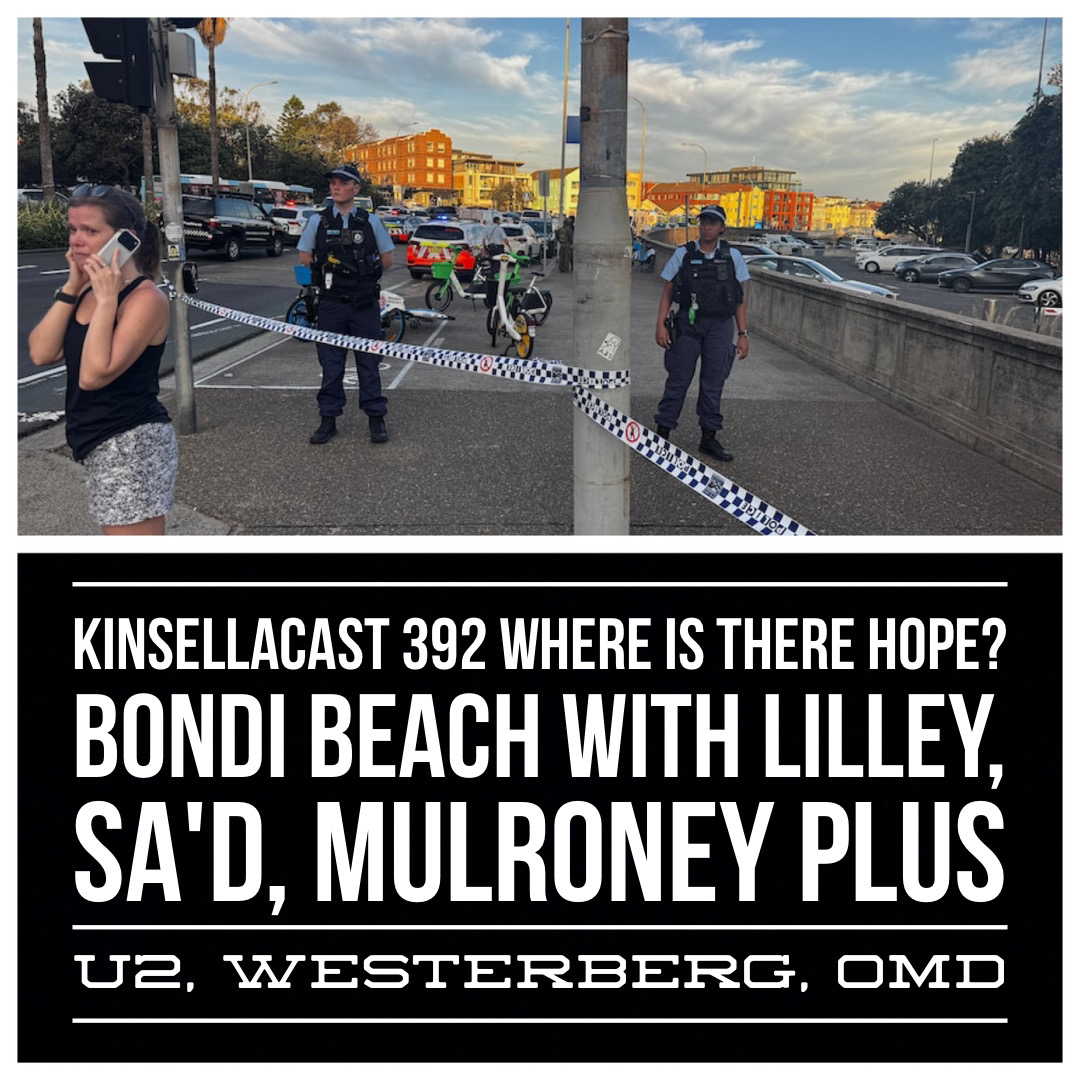

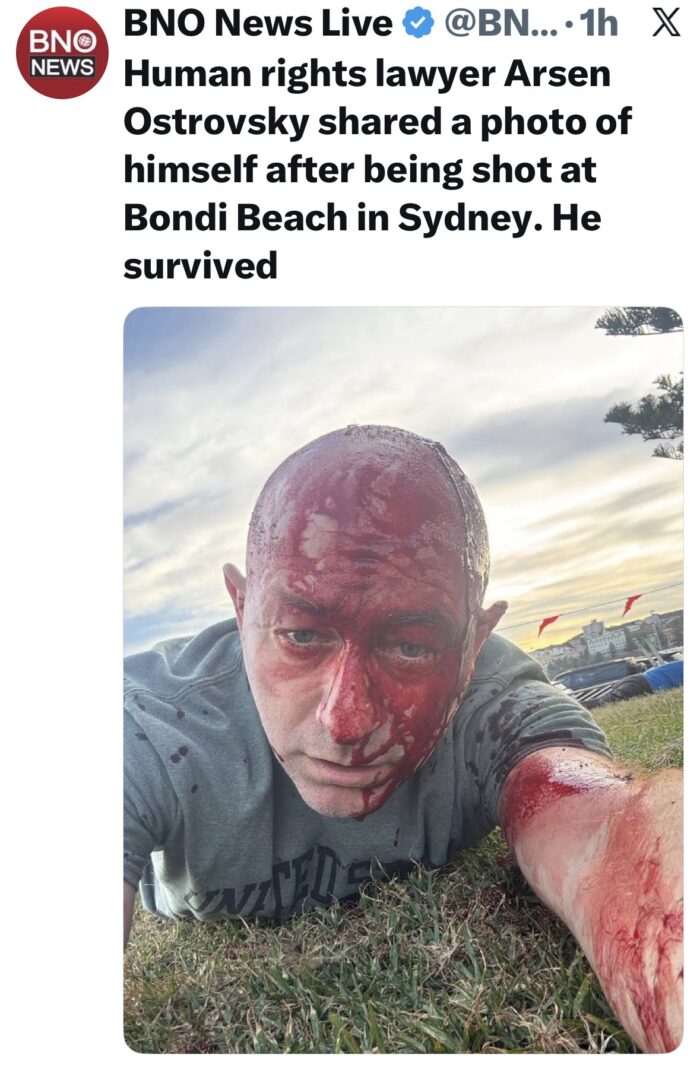
I know Arsen. He helped me enormously with my new book The Hidden Hand. I am shocked, truly, by what happened in Australia but grateful he survived. God bless him and everyone dealing with this horror this morning
I said months ago that people were going to get killed – and they have been, in Washington, Boulder and now Bondi Beach.
For you, you have to ask yourself: have I condemned the Jew hatred that has taken innocent lives? Have I been indifferent to the suffering that Jews now experience, everywhere? Have I done something, anything, to stop this madness?
For me, I have been invited to celebrate the first day of Chanukah with Jewish friends at the synagogue in Belleville. And I am going to stand with them, and support them, and help protect them. Always.
The triumph of light over darkness.
That’s all it means, really: perseverance, faith. It’s a characteristic of just about every religion, when you think of it. Hope. Hope for something better.
Is a symbol of hope – of faith, of perseverance – somehow objectionable? Is it wrong, to want that? It is for a bunch of people who run a Toronto-area building, allegedly.
Because…it’s a Jewish symbol?
Here’s the sad story: a couple years ago, a woman who we have agreed not to name asked her condo building’s board if it would be okay to put up a small menorah in the lobby.
A menorah is basically a little candelabra that holds, you know, nine candles. In public places, the menorah don’t usually have real candles – just fire-safe representations of candles.
There was a Christmas tree in the lobby. The woman asked if there could be a menorah, too.
The condo board said no.
Here’s the thing: Chanukah, which starts today, celebrates the Maccabees defiance – and triumph over – those who were trying to silence Jews. Trying to erase them. Which is what the condo board seemed to be doing to the woman who asked for a menorah, too.
“Feeling like my identity as a Jewish woman was unwelcome in the building where I live – was devastating,” she said.
So she went and put up a menorah anyway. Not long after, the condo board told her to remove it. They had issued a “directive,” allegedly. But they wouldn’t show the directive to her.
That was 2023. In 2024, the condo board banned all “religious” displays. This year, they changed course yet again – a Christmas tree would be permitted, because it was “cultural.” A menorah wouldn’t be, because it was “religious.”
For the woman, that was the final straw.
Says she: “We’re living in a time of rising antisemitism – the worst since the Holocaust – and moments like this remind me why it’s so important to speak up. Chanukah is about pride and perseverance, and I refuse to let my identity be pushed aside. In Canada, in 2025, equal recognition of who we are should be a given – not something you have to fight for.
“This is not about pitting cultures against one another but embracing an approach where all identities are included and respected.”
So she’s taking the condo board to court – the Human Rights Tribunal of Ontario, to be precise. And CIJA, The Centre for Israel and Jewish Affairs, is helping her.
They’ve made a human rights complaint – arguing that choosing one religion’s symbol (a Christmas tree) over another religion’s symbol (a menorah) is “direct discrimination.” That kind of discrimination disproportionately hurts Jews, obviously. And, CIJA says, the condo board “failed to provide accommodation, transparency, or a legitimate justification for their decision.”
Says Richard Marceau, Senior Vice President, at CIJA: “It’s 2025. No one should have to fight for equal recognition of their religious and cultural identity in their own home.” Well said.
We’re not giving the address of the building, to protect the identities of the people who live there. CIJA and the applicant agree with that.
But the applicant still insists on a few things: if she prevails, she wants the condo board to get some training about how to handle situations like this. She wants a new policy for holiday displays. She wants a small payment of damages.
And, of course, she wants a menorah in the lobby.
Where it belongs.
Director Kari Holland directing the narrator of The Campaign documentary, about the global propaganda campaign against Jews and the West. Out soon.

Attacks on Jews at Toronto’s Metropolitan University. Students at a California school forming a swastika with their bodies on a football field, alongside a quote from Adolf Hitler. A far-Right creep going on Piers Morgan to say that “Hitler was cool.” Those are the recent examples.
And many, many other instances of Jew hate in the past two years, too many to list: antisemitic encampments at universities, mobs blockading streets and predominantly-Jewish neighborhoods, vicious attacks on Jews and Jewish institutions. Sometimes – in places like Washington, D.C. or Boulder, Colorado – even murder.
With all of those incidents, wherever they are happening, there is one common element: the perpetrators.
The perpetrators – the haters – are young people.
Antisemitism remains anathema to those in their forties and older. But to so-called Gen Z (ages 18 or so to 25) and Millennials (ages 25 to 40 or so), antisemitism is all the rage, in these dark days. From Holocaust denial to antisemitic blood libels to support for monsters like Hamas: young people, across Western democracy, are the demographic that have become most susceptible to the homily of hate.
It’s well-known that Jew hatred has lately been a defining characteristic of the Left. Young people with self-identified progressive ideals have shown they are far too willing to adopt antisemitic tropes and themes.
But now, a new report by a respected American conservative think tank suggests the problem is growing on the Right, too. The report, by the Manhattan Institute for Policy Research, was released earlier this month. And it paints a disturbing picture about the attitudes and beliefs of young people across the ideological spectrum.
The main focus of the report is the U.S. Republican coalition, which has been resolutely pro-Israel since the Ronald Reagan era. The Manhattan Institute canvassed the opinions of what they called Core Republicans, the majority made up of those who tend to be older and longstanding party members/supporters.
Among what they called “New Entrant Republicans,” however, ominous trends were seen. “The survey’s first major finding is that the overwhelming majority of the current GOP reject racism, antisemitism, and conspiratorial thinking in politics,” the Institute noted.
But nearly 20 per cent were what they called “anti-Jewish Republicans.” Said the report: “Anti-Jewish Republicans are typically younger, disproportionately male, more likely to be college-educated, and significantly more likely to be New Entrant Republicans.”
The shocking trend was not seen among Republicans alone. “The survey finds slightly higher levels of anti-Jewish sentiment among Democrats—20 per cent, compared to 17 per cent among Republicans,” the report’s authors noted. “[Younger Republicans are] more likely to express tolerance for racist or antisemitic speech, more likely to support political violence, [and be] more conspiratorial.”
And young Republicans are big, big believers in conspiracies. The topline conspiracy theories – NASA faked the moon landing, the Holocaust did not happen, 9/11 was an inside job, childhood vaccines cause autism, and so on – were enthusiastically embraced by younger GOP members. A third of them believe most or even all of the conspiracies.
Meanwhile, older Republicans strongly oppose antisemitism, by a factor of nearly two to one. They also feel that antisemites should not be welcomed into their ranks “under any circumstances.”
But, again, the younger cohort are far more likely to have racist (31 per cent) or antisemitic (25 per cent) views.
Said the Institute: “These [Republicans] are also significantly more likely to believe multiple conspiracy theories and to support political violence. Consistent with their higher likelihood of falling into the anti-Jewish Republican category, roughly one in three self-identify as either racist or antisemitic.”
And: “Younger and newer members of the GOP coalition contain a frustrated, alienated subset that is often hostile toward institutions and norms.”
And, as other polls in the U.S., Canada and Europe have shown with youthful progressives, young people on the Right are far more willing to justify the use of violence in politics – which, of course, is the literal definition of terrorism: using violence to achieve a political goal. Fully 54 per cent of young Republicans believe violence is justified in politics, says the report.
Concluded the Manhattan Institute: “Support for political violence is also high among those who believe many conspiracy theories and among those who tolerate openly racist or antisemitic individuals.”
“And age,” they wrote, “is one of the strongest predictors.”
This post has been seen nearly 500,000 times. Haven’t had much pushback on it, either.

My girlfriend Paula Christison had been over, and we’d been studying, then watching something on the little black and white TV we had. My Carleton roommate, Lee G. Hill, was there too. Lee and I had been great friends in Calgary. In junior high, we’d started a couple fanzines with Beatles-centric themes. In our shared room on Second Russell, we had a couple John Lennon posters up amongst the punk rock stuff.
Paula left for her place downtown, so Lee and I were studying when the phone rang. It was Paula. “John Lennon’s been shot, babe,” she said. “It’s on the radio.”
His assassination, on December 8, 1980, was of course a terrible tragedy – and so, to me, was the fact that his last album (before the inevitable avalanche of ham-fisted compilations and retrospectives) was a piece of self-indulgent, saccharine shite like Double Fantasy.
Generally, he always needed Paul as an editor, and vice-versa. But his best album – and one of the best albums of all time, in my view – was Plastic Ono Band. It was like him: it was stark, and raw, and different, and deeply, deeply personal. Some say the LP was the product of his dalliance with primal scream therapy, or his response to the (necessary, and overdue) collapse of the Beatles. To me, it was instead an actual piece of art and great rock’n’roll, improbably found under the same piece of shrink wrap. Like listening to someone’s soul, without having received an invite to do so. You should listen to it today.
The next morning, exams weren’t cancelled, though it felt to me like they should have been. When I walked into Carleton’s gym, there was a guy sitting there, already wearing a John Lennon T-shirt. I wanted to punch him. Instead, I just took my seat and wrote the stupid exam.
Forty five years. I can’t believe he’s been gone that long; I can’t believe I’m way older than he ever got a chance to be. It sucks.
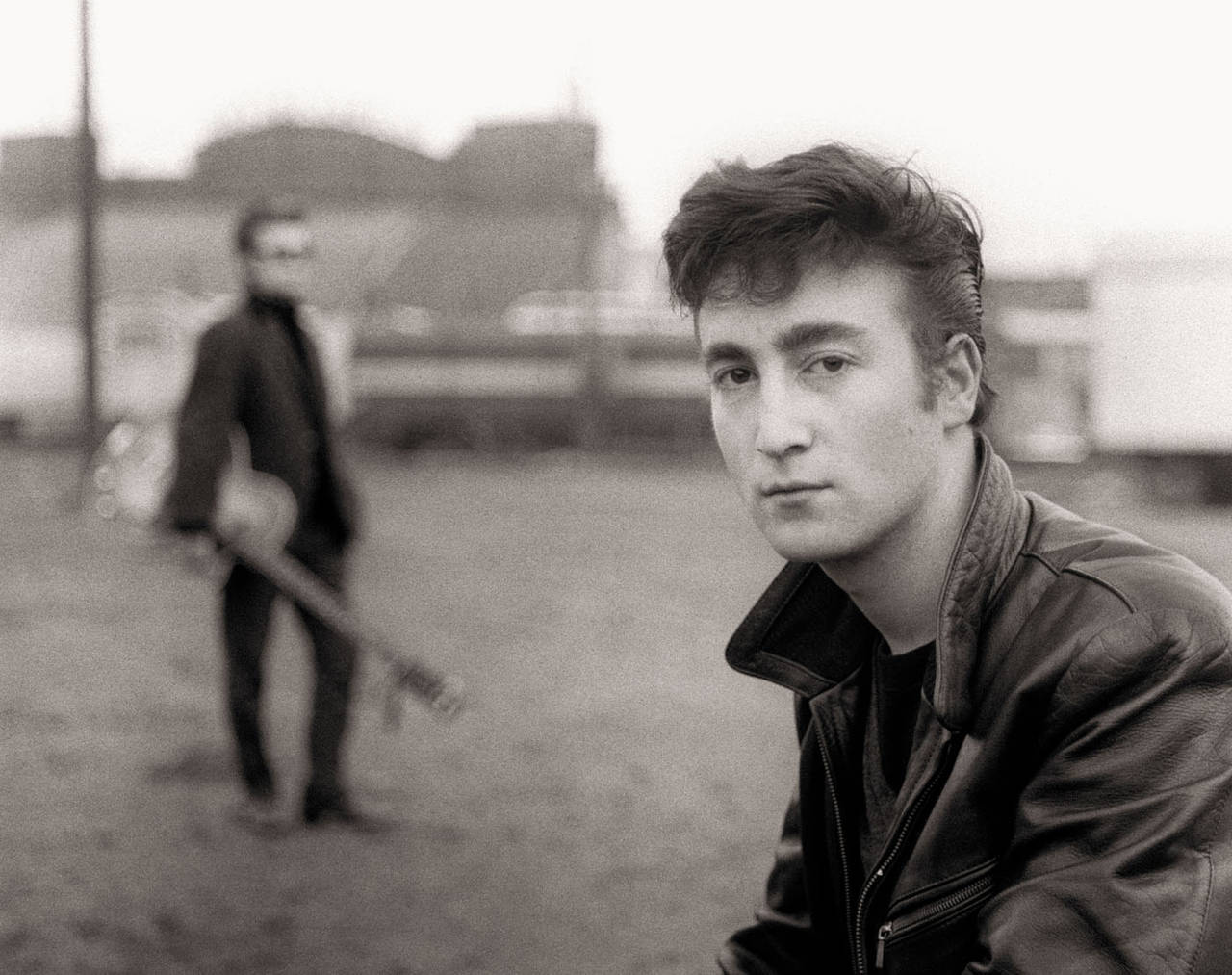
Here’s my favourite picture of him, the one I used to use on posters I’d make up for Hot Nasties shows. I liked it because he looked like a punk. That’s Stu in the background, I think. Also long gone.
We miss you, John. Hardly knew you.
LONDON – Is this Nigel Farage’s “grab ’em by the pussy” moment?
For those who were asleep or in a coma in October 2016: one month before the U.S. presidential vote, the fabled Access Hollywood tape was published by the Washington Post.
On the tape, Donald Trump is heard saying, and we quote: “I don’t even wait. And when you’re a star, they let you do it. You can do anything. … Grab ’em by the pussy. You can do anything.”
The “they” was women. The “I” was Donald Trump.
It was awful, it was misogynistic, and – as things turned out – it was no impediment whatsoever to winning the presidency. The Access Hollywood tape notwithstanding, Trump narrowly won the 2016 race, which probably said more about Americans than it did about him. But I digress.
For days here in the United Kingdom, there has been a similar sort of controversy raging about a similar sort of politician – you know, the bigoted, bilious old man type of politician. Nigel Farage.
Farage – whose name does not rhyme with “garbage,” but possibly could – is the leader of Reform UK, which is essentially the British equivalent of MAGA Republicans. He has been credibly pegged as a possible future Prime Minister. Like Trump, Farage says lots of things that are outrageous. But this time, Farage may have been a bit too, too outrageous.
There is no incriminating tape in Farage’s case, but there are nearly 30 former schoolmates of Farage. All have stepped forward to assist the left-leaning tabloid, The Guardian, in its investigation into Farage’s conduct when he attended Dulwich college school in the late 1970s and early 1980s.
[To read more, subscribe here]